
Jawline Enhancement
Jawline enhancement (also known as jawline filler, jaw augmentation, or jawline contouring) is a non-surgical injectable treatment designed to define and shape the lower face. By placing dermal filler strategically along the jawline (and, where appropriate, blending into the chin), we can sharpen the mandibular border, improve symmetry, and create a more structured profile—while keeping results natural and in proportion with your features.
Benefits of Jawline Enhancement
Stronger Definition & Transition
Jawline filler is commonly used to create a clearer separation between the jawline and neck, helping the lower face look more defined and “finished.”
Facial Balance & Proportion
Carefully placed filler can improve overall harmony—helping balance the relationship between the nose, lips, chin, and jawline, rather than focusing on one feature in isolation.
Subtle “Lift” for Early Jowls
Jawline and chin enhancement is often chosen by younger patients with a naturally weaker jaw/chin, and by more mature patients noticing loss of definition with age. It can also help improve the look of mild jowling.
Customisable Result
Before/after galleries show outcomes ranging from subtle contouring to more sculpted jaw enhancement, depending on anatomy and your personal treatment goals.
Treatment Details
Strategic Contouring
Jawline enhancement is typically performed with dermal fillers (commonly hyaluronic acid (HA) in many clinics) placed in multiple points along the jawline and shaped to suit your profile. Numbing is often used for comfort, and many filler products also include lidocaine.
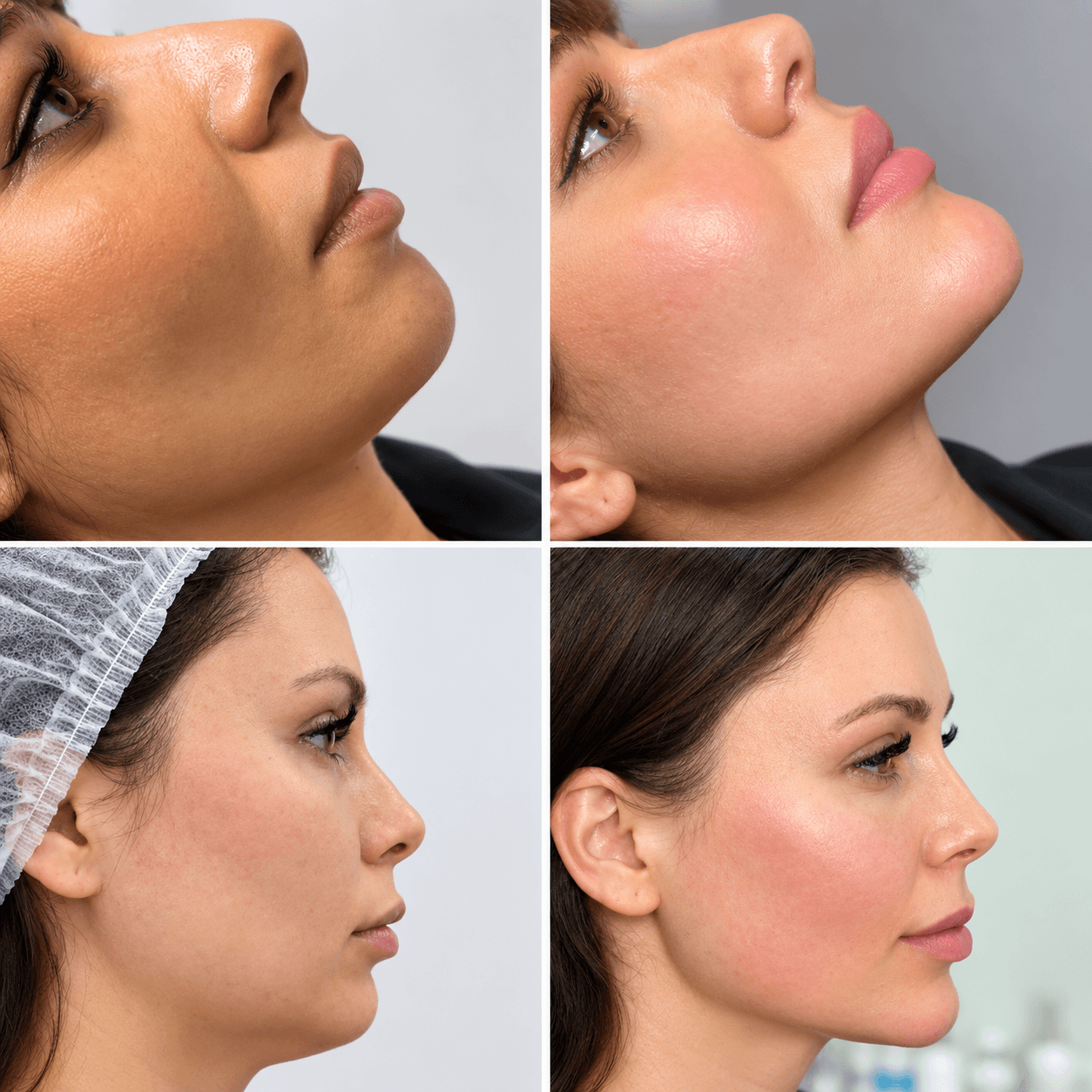
How it works
Structural Placement
Modern jawline filler focuses on structural definition and contour refinement, enhancing the jawline’s natural angles rather than trying to “erase” anatomy.
Key Techniques
Common approaches include mandibular line enhancement (cleaning up the jaw border), angle definition, and chin–jawline blending for a seamless lower-face frame.
Individual Product Amounts
Some start around ~2 ml for many women and ~4 ml for many men for a noticeable but natural change—then “layering” over time if needed. Exact amounts vary.
Adjustability
When HA filler is used, it can be dissolved with hyaluronidase if clinically necessary, offering peace of mind.
Cost is typically determined by the mL required to achieve your desired definition; confirmed after consultation.
Duration
Around 30–45 minutes
Downtime
Minimal; mild swelling settles in a few days
Results
Immediate, true results ~14 days
Longevity
Often ~12–18 months
*Consultation required prior to treatment.
Administered by a qualified professional.
Steps of Treatment
Consultation & Facial Assessment
Your practitioner assesses your lower-face structure, symmetry and goals, then designs a plan tailored to your anatomy and proportions.
Preparation & Comfort
Skin is cleansed; a topical anaesthetic may be applied, and many fillers include lidocaine to help reduce discomfort.
Precise Filler Placement
Filler is placed at planned points along the jawline (and potentially the chin) and gently shaped to refine contour.
Review & Follow-Up
Most people only need one session, but a small number may benefit from a second appointment once swelling settles and the filler has fully “sat.”
Clinical Protocol
Pre-Care
Hydration matters
Because HA fillers are water-attracting, some clinics recommend being well-hydrated before treatment.
Reduce bruise risk
Avoid alcohol 24 hours before. If you take blood-thinners, discuss changes only with your doctor’s consent.
Avoid aggressive treatments
Avoid stronger facial treatments (like certain chemical peels) a few days prior to the procedure.
Qualified injector
The NHS advises checking training/qualifications and understanding risks because filler complications can be serious.
Aftercare
Expect mild swelling
Mild swelling and bruising is common and often settles within a few days (3-7 days for inflammation to settle).
Avoid the 'big three'
Avoid strenuous exercise, excessive heat (sauna/sunbeds), and pressure on the area for 24–48 hours.
Makeup timing
Some clinics advise that makeup can be lightly applied after around 6 hours to cover any bruising.
Know the rare red flags
The NHS explicitly lists rare serious complications including infection, nerve damage and blindness.