Nasolabial Folds
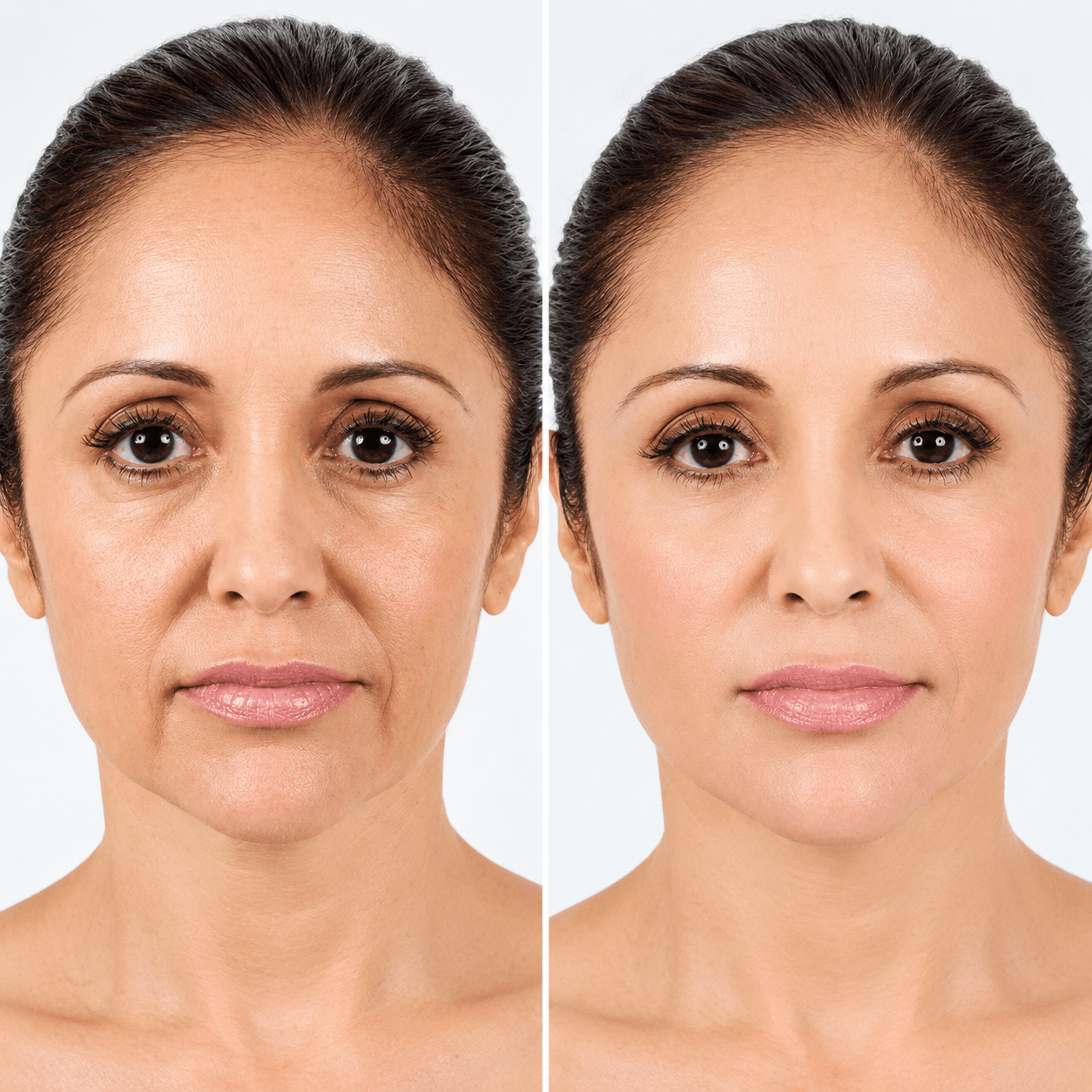
Nasolabial folds are the natural creases that run from the sides of the nose to the corners of the mouth. Nearly everyone has them, but they can become deeper and more noticeable with age as skin thins and soft tissue support changes. At Lilac Aesthetic, we use a personalised, full-face approach—most commonly with hyaluronic acid dermal filler—to soften the fold and reduce shadowing while keeping your smile looking natural.
Benefits of Nasolabial Folds Treatment
Softens Deep Creases & Shadowing
Dermal filler can “plump” and support the area so the fold looks less intense—especially in certain lighting where the shadow can make the line look deeper.
Restores Support Lost With Age
Nasolabial folds can deepen due to factors such as sun exposure, collagen loss, and fat loss, which reduces firmness and support in the mid-face. Replacing support strategically can help the fold look less prominent.
Natural-Looking Rejuvenation
In many people, the “fold” is partly driven by mid-face volume loss. Supporting the cheek/mid-face (rather than overfilling the line) can create a more balanced, refreshed result.
Treatment Details
Targeted Volumisation
Nasolabial fold treatment is typically performed using hyaluronic acid (HA) dermal fillers placed with a controlled technique to restore volume and reduce the appearance of the crease. Depending on your anatomy, improvement can come from (1) gently supporting the fold itself and/or (2) adding support in the upper cheek/mid-face to lift the tissue above the fold.
It’s also important to know: nasolabial folds are a normal facial feature and don’t need “fixing.” Even with excellent technique, fillers generally reduce prominence rather than making folds completely disappear.
How it works
Targeted volumisation
Filler is placed to restore support where structure has reduced over time.
Immediate result, then refinement
You’ll usually see improvement right away, with the final look becoming clearer as swelling settles.
Maintenance over time
Dermal fillers are absorbed gradually, so results are temporary and vary from person to person.
Cost depends on the depth/length of the fold and the amount of product required; confirmed after consultation.
Duration
30–60 minutes (depending on plan)
Recovery
Commonly 1–3 days of mild swelling
Sessions
Often 1 (then maintenance as needed)
*Consultation required prior to treatment.
Administered by a qualified professional.
Steps of Treatment
Consultation & Assessment
We assess your fold pattern, mid-face support, skin quality and facial movement, then agree a plan that prioritises a natural finish.
Preparation
The skin is cleansed and we talk through comfort measures and the placement plan.
Precise Filler Placement
HA filler is placed in controlled amounts to soften the crease—either directly in the fold and/or by supporting the cheek area above it.
Review & Aftercare
We check balance and symmetry, discuss what’s normal in the first few days (swelling/bruising), and provide aftercare guidance.
Clinical Protocol
Pre-Care
Understand the cause
Common drivers include ageing-related collagen/fat loss and sun damage; smoking is also associated with deeper, more permanent lines over time.
Arrive with healthy skin
If skin is inflamed or infected, filler should be delayed until it’s resolved.
Consultation-led approach
A thorough consultation is standard before deciding placement and product amount.
Aftercare
Expect mild swelling
Swelling and bruising are common after dermal filler injections and usually settle over days (sometimes longer).
Hands off & clean
Avoid touching the treated area; some clinics also advise avoiding makeup and strenuous exercise for up to 72 hours.
Know the rare red flags
Seek urgent medical care if you experience severe pain, skin colour change, or vision disturbance shortly after treatment.